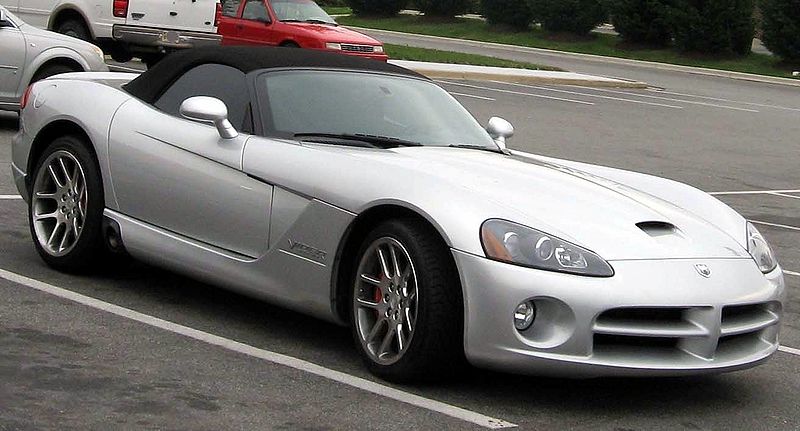
For 2008, the Viper received a 90 hp (67 kW) bump up to 600 hp (450 kW), a 25 lb·ft (34 N·m) torque bump up to 560 lb·ft (759 N·m) and the engine displacement increased up to 8.4 liters (512 ci/8354 cc) from 8.3, also receiving better flowing heads with larger valves, Mechadyne variable valve timing on the exhaust cam lobes, and dual electronic throttle bodies. The rev limit was able to be increased by 300 rpm due to the improved valve-train stability from both the new camshaft profiles and valve-springs. The development of the engine was done with some external assistance from McLaren Automotive and Ricardo Consulting Engineers.Changes outside of the engine were less extreme, but still influential. The Tremec T56 transmission has been replaced with a new Tremec TR6060 which now has triple first gear synchronizers and doubles for higher gears. Shifts are claimed to be 18% quicker than the 2007 Chevrolet Corvette Z06. The Dana M44-4 rear axle from the 2003-2006 model now has a GKN ViscoLok speed-sensing limited-slip differential that greatly helps the tires in getting grip under acceleration. Another performance upgrade was the removal of run-flat tires; the new Michelin Pilot Sport 2 tires have increased driver feedback as well as grip and, along with revised suspension (springs, anti-roll bars, and shock valving), has made the Viper more neutral in cornering.The modifications made to the 2008 model year car were enough for Chrysler to make it distinct from the first SRT-10, and the 2008 model became known as Gen IV, just in time for release with Chevrolet's 620 hp (460 kW) Corvette. Another notable change is the reworking of the exhaust system, previous third generation Vipers had their exhaust crossover under the seats which resulted in a large amount of heat going into the cockpit, this was done initially to help improve the cars exhaust note, since the first 2 generations of Viper, which had no crossover, were criticized for their lackluster exhaust notes. For 2008, the Viper exhaust will utilize a new exhaust system with no crossover, reducing the heat that enters the cockpit, but allowing the Viper to still produce an exotic sound.The electrical system has been completely revised for 2008. Changes include a 180-amp alternator, twin electric cooling fans, electronic throttles, and completely new VENOM engine management system. CAN bus architecture has been intertwined with pre-existing systems to allow for regulatory compliance. The fuel system was upgraded to include a higher capacity fuel pump and filtration system.[3] Car and Driver recently tested the car and got a 0-60 mph time of 3.5 seconds, a 0-100 mph time of 7.6 seconds and a Quarter Mile-time of 11.6 seconds at 126 mph (203 km/h).[4] Dodge's claims for top speed are 197 mph (317 km/h) and 202 mph (325 km/h), for the Roadster and Coupe respectively. Car and Driver also tested the Viper's track performance, and managed a fast sub 3 minute lap time around Virginia International Raceway. The Viper's time, despite hot weather, was faster than the Corvette Z06, Ford GT, Porsche 911 Turbo and 911 GT3, Audi R8, and other such cars. According to Car and Driver and Motortrend, the car's slightly adjusted suspension setup and new differential gave it cornering ability as sharp as before with even better control, feedback, and response.